

Denver Golf values include Stewardship, Teamwork, Accountability, Ambition, Respect, Satisfaction, Integrity and Quality. Our Bee Friendly initiatives focus on Stewardship, and how we are conducting our business in an environmentally friendly way. We strive to continually improve our operations to deliver a complete golf experience while providing our community with excellent customer service, programs to grow the game for future generations, and outstanding course conditions, while remaining stewards of the environment. How do we do this?
2026 Adverse Weather Conditions & How This Is Affecting Our Golf Courses
Weather Benefits and Challenges for Golf Courses
This unusually warm and dry winter has allowed for an uninterrupted golf season — something we know many of you have enjoyed. However, the lack of snowfall does come with challenges when it comes to maintaining healthy playing conditions.
Snow cover typically acts as a protective blanket for dormant turf. Without it, high-traffic areas can become thin, and soil structure can be compromised. Because the turf is not actively growing, it cannot recover from wear in the same way it would during the growing season. To protect the course for spring and in-season play, we’ve had to adjust our maintenance practices to fit this unusual weather pattern.
Canada Geese & Turf Wear
Another impact of open turf throughout the winter has been increased Canada geese activity. With changing migratory patterns, many geese now remain in our area year-round, and golf courses naturally attract them.
While waste management is part of normal operations, this season’s continuous stretch of dry, exposed turf has created an extreme situation. Constant sweeping and blowing to manage debris can further damage already stressed, dormant turf. On some areas of the course, we’ve had to reduce cleanup frequency to prevent additional wear.
We understand that this may affect playability at times. With irrigation systems now activated and the potential for an early spring green-up, we look forward to increasing cleanup efforts as turf conditions allow.
Cart Traffic & Course Protection
Cart traffic is always something we carefully monitor. This year, with no snow cover and steady winter play, the turf has been especially vulnerable. We limited cart use early in the season to prevent irreversible damage.
The recent shift to walking-only play was not a decision taken lightly. It was made to give the course the best opportunity to recover and provide more normal playing conditions by spring. Any carts currently on the course are accommodations for golfers with disabilities.
What We’re Doing to Keep the Course Playable
Our team has been actively managing conditions throughout the winter:
- Haze geese as permitted under the Migratory Bird Treaty Act
- Hand-water high-value turf areas such as greens and tees
- Activate irrigation systems in early February to restore moisture to turf and trees
- Reduce traffic from golf carts and maintenance equipment
- Implement practices to encourage earlier turf recovery, including:
- Black sand applications to increase soil temperatures
- Turf pigments to reduce UV stress and enhance photosynthetic efficiency
- Maintain a strategic drought response plan
- Use seeding and aeration only when necessary — while effective, these methods require significant labor and water and can take months before areas are fully playable
Protecting the turf we currently have is far more sustainable than rebuilding from seed after preventable damage.
We appreciate your patience and understanding as we navigate these unique conditions. Our goal is always to balance playability today with the long-term health of the golf course — ensuring the best possible experience for the entire season ahead.
RECYCLING
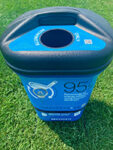
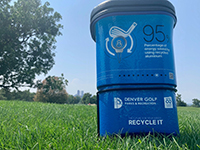 Did you know we recycle on the golf course? To help manage a cleaner recycling stream, we provide “Aluminum Only” recycling bins on the course and clubhouse. We will continue to use single stream recycling for all other materials.
Recycling fun facts:
- Aluminum is infinitely recyclable
- Only 14% of aluminum cans are recycled in Colorado and 46% in the US. COLORADO WE CAN DO BETTER! Each year Denver Golf recycles approximately 5,000 pounds of aluminum which is roughly 160,000 aluminum cans.
- Did you know that aluminum is infinitely recyclable?
- Even though Denver Golf participates in single stream recycling, often aluminum gets commingled with trash and cannot be recycled. Aluminum only bins improve our recycling efforts by keeping a clean recycling stream.
Help us more effectively capture and recycle aluminum today! Please place only aluminum cans in our new bins and we will take it from there.
WATER CONSERVATION
We offer almost 1,000 acres of green space for Denver. We pride ourselves on managing this resource providing excellent playing conditions while conserving water. Did you know that Denver Golf courses use approximately 20% less water than bluegrass lawns? We accomplish this by continually improving our irrigation management through modernized efficiencies and technology.
- We transition non-functional turf to water conservation areas using native grasses.
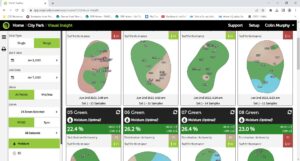
- POGO Soil Monitoring – The POGO moisture monitoring technology shows the percent of moisture in greens so our maintenance staff can hand water dry spots instead of blanket irrigation applications, resulting in a better putting surface and reducing water consumption.
BEE KEEPING PROGRAM
Golf courses are natural habitats for pollinators. With our bee keeping program, we currently we have honeybee hives at Willis Case, Aqua Golf and Wellshire. We are excited to continue to grow our hives each year and develop plantings that help not only our bee colonies but also other pollinators.
Denver Golf recognizes our responsibility to native bees as well as honeybees. Each year we improve and expand habitats for all types of pollinators through our horticulture program.
Be a Bee Friendly Pro in your own habitat!
- Never apply insecticides to flowering plants. Remove insects such as Japanese Beetles by hand and place them in a soapy water solution.
- Never spray herbicides to flowering weeds such as dandelions. Remove weeds mechanically or if you must apply an herbicide, wait until the weeds are no longer producing flowers.
GARDENING PROGRAM
The vegetable garden at Harvard Gulch brings in about 500-700 pounds of food each year. This organic produce is donated to a local nonprofit providing reduced fee or no cost meals in our community. Each year we hope for an even better yield as we develop plantings that are as delicious as they are beautiful.
Willis Case transitioned out-of-the-way play areas into conservation areas by planting pumpkins and squash. We hope to expand our pumpkin patch program in 2024 to support Denver Park’s and Recreation (DPR) children’s social enrichment program. This donation reduces the cost for Recreation from having to purchase pumpkins, and creates a great synergy within DPR departments to support each other and give back to our community.
ELECTRIFICATION OF 2-CYCLE POWER EQUIPMENT
For several years Denver Golf has working with battery powered tools that can replace the heavy emission producing 2-cycle gas power equipment. As battery powered technology has advanced to the level equal or better than existing 2-cycle tools, Denver Golf is committed to transitioning into battery powered tools such as string trimmers, chainsaws, small blowers, and push mowers.
- In 2023 Denver Golf received a grant that enabled us to replace about 25% of our 2-cycle gas power tools to battery powered electric.
- As existing 2-cycle tools need replacement, Denver Golf will replace with battery powered equipment.
- When feasible (cost and availability) Denver Golf will purchase larger electric powered maintenance equipment.
WASTE REDUCTION
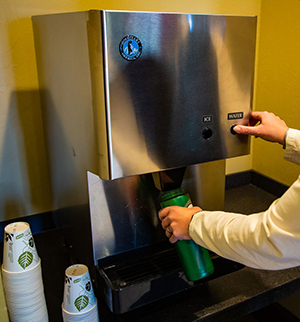
As part of our Bee Friendly initiative, we made the decision to remove the on-course water jugs and replaced them with water fill stations in each clubhouse/restaurant areas as well as in permanent on-course bathrooms. This was done for a few reasons:
- To reduce waste of paper cups
- Create more sanitary drinking water conditions (Reduces bacteria growth & tepid water conditions that occur with on-course jugs.)
- Eliminate safety risks to employees (Water jugs can weigh up to 80 pounds to lift for an employee.)
Bring your reusable containers and fill up before you play or at the turn and help us create a safer environment for you and our employees.
COLORADO GOLF’S ECONOMIC AND ENVIRONMENTAL IMPACT STUDY
Learn how golf is affecting Colorado from an economic and environmental perspective. Read the 2022 Report provided by the Colorado Golf Coalition.